
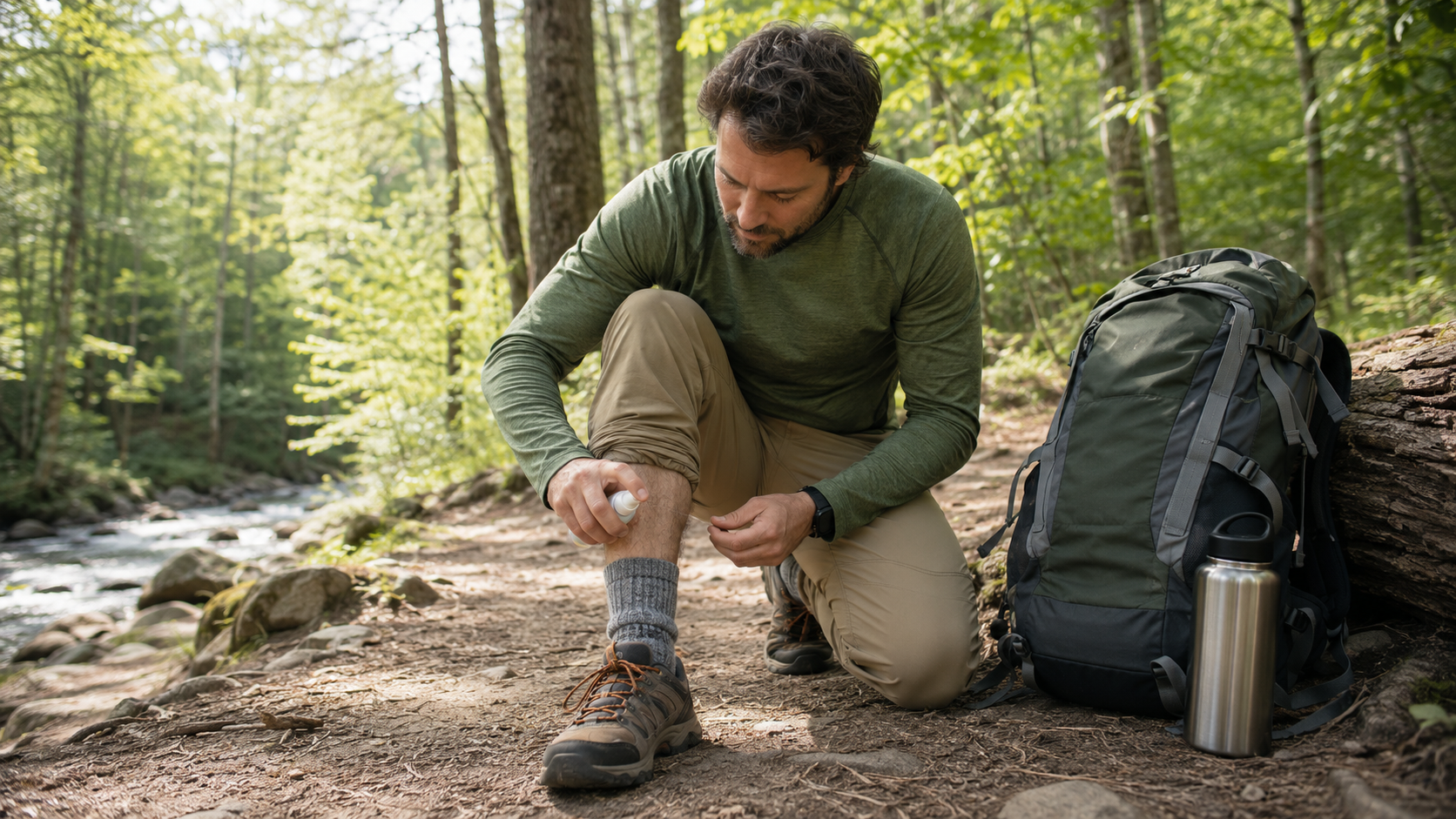
Outdoor Tick Prevention
How to Prevent Tick Bites Outdoors
Ticks may be encountered in wooded, grassy and brush-covered areas, but a few practical habits can reduce the chance of bites and make ticks easier to find early.
This guide explains how to prepare before going outdoors, reduce contact with ticks during an activity and check people, clothing and pets afterward.
Outdoor Tick Prevention at a Glance
The best protection combines several practical measures rather than relying on one product or habit alone.
- Know where ticks are likely to be present.
- Wear clothing that limits exposed skin.
- Use a suitable tick repellent according to the label.
- Stay near the center of trails when possible.
- Avoid brushing against tall grass and dense vegetation.
- Check clothing, skin, hair and pets after outdoor activities.
- Remove attached ticks promptly and correctly.
- Monitor any bite area for later changes.
No prevention method provides complete protection. A thorough tick check after outdoor exposure remains important even when protective clothing and repellent were used.
Before You Go Outdoors
A few minutes of preparation can make tick prevention easier during and after the activity.
Check the local environment
Ticks are commonly associated with grassy, brushy, wooded and leaf-covered areas. They may also be present in gardens, parks, campsites and the edges of walking trails.
Consider the location, vegetation, season and planned activity before deciding what protection to use.
Choose suitable clothing
Wear long trousers, closed shoes and a long-sleeved top when conditions allow.
Clothing that fits closely around the ankles and wrists can reduce direct access to the skin.
Wear light-colored clothing
Ticks may be easier to notice on pale or light-colored fabric than on dark clothing.
Light clothing does not prevent bites by itself, but it may make crawling ticks easier to spot and remove.
Tuck clothing when appropriate
Tucking trousers into socks can reduce the number of direct openings near the ankles.
A tucked shirt may also reduce access around the waist during activities in dense vegetation.
Prepare repellent in advance
Choose a repellent that is labeled for use against ticks and suitable for the intended person, clothing or equipment.
Read the label before leaving home rather than trying to understand the instructions during the activity.
Pack a tick-removal tool
Carry fine-tipped tweezers or a suitable tick-removal tool, especially during hiking, camping, hunting or longer outdoor trips.
Plan for children and pets
Bring suitable clothing and protection for every family member. Ask a veterinarian about appropriate tick prevention for dogs or cats before the trip.
How to Reduce Tick Exposure Outdoors
Your route and behavior can influence how often clothing and skin come into contact with tick habitat.
1. Stay near the center of trails
When walking on a maintained trail, remain near the center rather than brushing against vegetation at the edges.
2. Avoid tall grass when possible
Do not walk, sit or lie directly in tall grass or dense ground vegetation when a clearer alternative is available.
3. Limit contact with brush and leaf litter
Avoid pushing through dense shrubs, low branches and accumulated leaf litter unnecessarily.
4. Choose resting places carefully
Use a clear, dry and maintained area for breaks rather than sitting directly beside dense vegetation.
Place blankets, bags and clothing on a clean surface rather than on leaf litter or long grass.
5. Check clothing during longer activities
Look at trouser legs, socks, shoes and outer clothing during breaks. Remove crawling ticks before they reach the skin.
6. Keep bags and equipment away from vegetation
Backpacks, jackets and blankets can pick up ticks when placed directly against grass, shrubs or leaf litter.
7. Keep children within clear areas
Encourage children to use maintained paths and open play areas rather than crawling through dense vegetation.
8. Keep dogs under control
Prevent dogs from repeatedly entering dense brush or long grass when possible. Inspect them during breaks on longer walks.
9. Do not rely on feeling a bite
Tick bites may not be immediately painful or noticeable. Continue using preventive measures even when no bite is felt.
10. Perform a complete check afterward
A quick look at clothing during the activity does not replace a full skin, hair and pet check after returning indoors.
How to Use Tick Repellents Safely
Repellents can be useful when they are selected and applied according to the product label.
Choose a product labeled for ticks
Not every insect repellent is approved or intended for tick protection. Check the label for the pests, application area and expected protection time.
Follow the label exactly
Use only the amount and application method described on the product. Reapply only as directed.
Apply skin repellents only to permitted areas
Do not apply repellent to cuts, wounds, irritated skin, eyes or the inside of the mouth.
Do not spray a product directly into the face. Apply it to the hands first when the label permits facial application, then spread it carefully.
Wash treated skin afterward
Wash exposed treated skin with soap and water after returning indoors when protection is no longer needed.
Use extra care with children
An adult should apply repellent to a child according to the product instructions.
Do not allow young children to apply repellent themselves or place treated hands near their eyes or mouth.
Use clothing treatments only as directed
Some products are intended for clothing, footwear, tents or outdoor equipment rather than skin.
Do not apply permethrin directly to skin
Permethrin products intended for tick protection are used on clothing or equipment according to the label, not as a skin repellent.
Allow treated clothing to dry
When treating clothing yourself, follow all instructions concerning ventilation, drying time and washing.
Consider factory-treated clothing
Pre-treated clothing may provide a convenient option for frequent hikers, outdoor workers or campers.
Do not assume natural means risk-free
A plant-based or naturally derived product still needs to be used according to its instructions. Effectiveness and permitted uses differ between products.
Use products available in your country
Approved ingredients, age restrictions and labeling can vary between countries. Follow local product labels and public-health guidance.
How to Protect Children From Tick Bites
Children often play close to grass, bushes and the ground, so clothing and later checks are particularly important.
Dress children for the environment
Use closed shoes, socks, long trousers and long sleeves when practical.
Keep hair easy to inspect
Tie back long hair and consider a hat in areas with low branches or dense vegetation.
Choose clearer play areas
Encourage play on maintained paths, short grass or clear ground rather than in dense brush or leaf litter.
Apply repellent for the child
An adult should apply an appropriate product according to the label. Avoid the child’s hands, eyes, mouth and irritated skin unless the product specifically permits that use.
Check the scalp carefully
After returning indoors, inspect the scalp, hairline, behind the ears and the back of the neck.
Check skin folds and covered areas
Ticks may move beneath clothing. Check armpits, the waist, groin, behind the knees and between the legs.
Make the check calm and routine
Explain that the check is a normal part of coming home after outdoor play rather than something frightening.
How to Protect Dogs and Cats Outdoors
Pets can be bitten by ticks and may also carry crawling ticks into the home.
Ask a veterinarian about prevention
Use a tick-prevention product that is suitable for the animal’s species, age, weight, health and location.
Use products consistently
Follow the dosing interval and application instructions. Do not assume that one treatment provides permanent protection.
Never use dog-only products on cats
Some products intended for dogs can be dangerous to cats. Use only products that are clearly labeled for cats or recommended by a veterinarian.
Inspect pets after every outdoor activity
Run your hands slowly through the coat and part the fur to inspect the skin.
Check common hiding places
Pay particular attention to:
- Around and inside the outer ears
- Around the eyes and muzzle
- Under collars and harnesses
- Under the front legs
- Between the back legs
- Around the groin
- Between the toes
- Around the tail
Remove attached ticks promptly
Use fine-tipped tweezers or a suitable pet tick-removal tool. Contact a veterinarian when the tick is difficult to reach or the animal cannot be handled safely.
What to Do After Being Outdoors
Ticks may remain on clothing, equipment, skin or fur after you leave an outdoor area.
Check clothing before entering living areas
Look over trousers, socks, shoes, jackets and bags. Pay attention to seams, cuffs, waistbands and pockets.
Remove outdoor clothing carefully
Avoid dropping used outdoor clothing onto beds, sofas or carpet before it has been checked.
Follow suitable laundry guidance
Wash and dry clothing according to the care label and local public-health guidance.
Heat can help kill ticks on suitable clothing, but garment care instructions should always be followed.
Shower after returning indoors
Showering can help remove unattached ticks and provides an opportunity to check the skin.
Perform a full-body tick check
Use a full-length mirror and a hand mirror, or ask another person to help with areas that are difficult to see.
Check the scalp and hair
Use the fingertips to feel through the hair and inspect the hairline, behind the ears and the back of the neck.
Check warm and hidden areas
Inspect:
- Under the arms
- Around the ears
- Inside the belly button
- Around the waist
- Between the legs
- Behind the knees
- Around the ankles
- Along the hairline
- Across the scalp
Check children again before bed
A second calm check may be helpful after an extended outdoor activity, particularly when the first check was rushed.
Check pets before they settle indoors
Inspect the coat, paws, ears and collar area before the pet enters beds, upholstered furniture or sleeping spaces.
Check outdoor equipment
Inspect backpacks, picnic blankets, tents, camping chairs and other equipment before storage.
What Should You Do If You Find a Tick?
The correct next step depends on whether the tick is crawling freely or attached to the skin.
If the tick is crawling
Remove it without crushing it against bare skin. Use tissue, tape, tweezers or another suitable method.
If the tick is attached
Remove it promptly with fine-tipped tweezers or a suitable tick-removal tool.
Do not use home remedies
Do not use heat, petroleum jelly, glue, nail polish or essential oils to force an attached tick to release.
Clean the area after removal
Clean the bite site, wash your hands and clean the removal tool.
Record the bite
Note the date and body location. A clear photograph can help document the area.
Monitor the bite and general health
Seek medical advice if an expanding rash, fever or other concerning symptoms develop afterward.
How to Make a Yard Less Suitable for Ticks
Yard changes may reduce tick habitat, but they should be combined with personal prevention and regular tick checks.
Remove leaf litter
Clear accumulated leaves from frequently used areas, paths and the edges of the lawn.
Keep grass maintained
Mow lawns regularly and remove tall weeds around play areas, seating areas and paths.
Reduce dense brush
Trim vegetation that creates damp, shaded cover near frequently used parts of the yard.
Create clear borders
A dry border of gravel, wood chips or another suitable material may help separate lawns and recreational areas from dense vegetation.
Move seating away from wooded edges
Place patios, play equipment and outdoor seating away from brush, leaf litter and heavily wooded boundaries when possible.
Stack firewood neatly
Keep firewood dry and arranged away from frequently used family areas.
Discourage wildlife near activity areas
Avoid leaving food sources that attract rodents or other wildlife close to seating and play spaces.
Use pesticides carefully
Outdoor pesticide treatment may reduce tick numbers in treated areas, but it should not be the only prevention method.
Always follow the product label and consult local authorities or a qualified pest professional about appropriate products and timing.
Continue personal tick checks
A well-maintained yard cannot guarantee that ticks are absent. Check people and pets after time spent outdoors.
Common Outdoor Tick-Prevention Mistakes
Relying only on repellent
Repellent helps reduce risk but does not replace suitable clothing, route choices and tick checks.
Using a product that is not labeled for ticks
Check whether the product specifically lists ticks and follow its permitted uses.
Applying permethrin to skin
Permethrin clothing treatments are intended for fabric or equipment according to the label, not direct skin application.
Forgetting to reapply when directed
Protection time varies. Follow the label rather than assuming one application lasts all day.
Checking only exposed skin
Ticks can crawl underneath clothing. Inspect covered and hidden areas too.
Ignoring the scalp
Hair can conceal small ticks, particularly on children.
Checking the person but not the clothing
A crawling tick may remain on trousers, socks, jackets or a backpack after the activity.
Forgetting pets
Dogs and cats may carry ticks into the home even when no tick is immediately visible.
Assuming short grass means no ticks
Ticks may still be present near yard edges, leaf litter, wildlife routes and shaded areas.
Stopping prevention outside summer
Tick activity varies by climate, region and species. Follow local seasonal guidance rather than relying only on the calendar.
Frequently Asked Questions About Outdoor Tick Prevention
Where are ticks most commonly found outdoors?
Ticks are commonly associated with grassy, brushy, wooded and leaf-covered areas. They may also occur in gardens, parks, campsites and yards.
Does wearing long clothing prevent every tick bite?
No. Long clothing can reduce exposed skin, but ticks may still crawl underneath it. Repellent and a complete tick check remain important.
What type of repellent should I use for ticks?
Choose a product that is approved in your country, labeled for ticks and suitable for the person or item being treated. Follow the label exactly.
Can permethrin be applied directly to skin?
No. Permethrin products used for tick prevention are intended for clothing or equipment according to the product label, not direct skin application.
Should I shower after hiking?
Showering after returning indoors may help remove unattached ticks and provides a good opportunity to inspect the skin and hair.
Where should I check my body for ticks?
Check the scalp, hairline, behind the ears, under the arms, around the waist, inside the belly button, between the legs, behind the knees and around the ankles.
Should I check my clothes for ticks?
Yes. Inspect seams, cuffs, waistbands, pockets, socks and shoes. Handle worn outdoor clothing carefully before placing it in living areas.
How can I protect my child from ticks?
Use suitable clothing, an age-appropriate repellent according to the label, clear play areas and a complete skin and scalp check afterward.
How can I protect my dog from ticks?
Ask a veterinarian about an appropriate preventive product, avoid dense vegetation when practical and check the dog thoroughly after outdoor activity.
Can I use a dog tick product on my cat?
Do not use a dog-only tick product on a cat. Use only products labeled for cats or specifically recommended by a veterinarian.
Can landscaping remove every tick from a yard?
No. Yard management may reduce tick habitat but cannot guarantee that ticks are absent. Personal prevention and regular checks are still necessary.
Your Next Step
Sources
This guide was prepared using current information from recognized public-health, environmental and veterinary organizations.
Centers for Disease Control and Prevention: Preventing Tick Bites ↗
Centers for Disease Control and Prevention: Prevent Mosquito and Tick Bites ↗
Centers for Disease Control and Prevention: Preventing Lyme Disease ↗
Centers for Disease Control and Prevention: Preventing Ticks on Pets ↗
United States Environmental Protection Agency: Insect Repellents ↗
United States Environmental Protection Agency: Find the Right Repellent ↗
United States Environmental Protection Agency: Using Repellents Safely ↗
United States Environmental Protection Agency: Repellent-Treated Clothing ↗
Learn more about our research and review process in our Editorial Policy and Sources and References.