
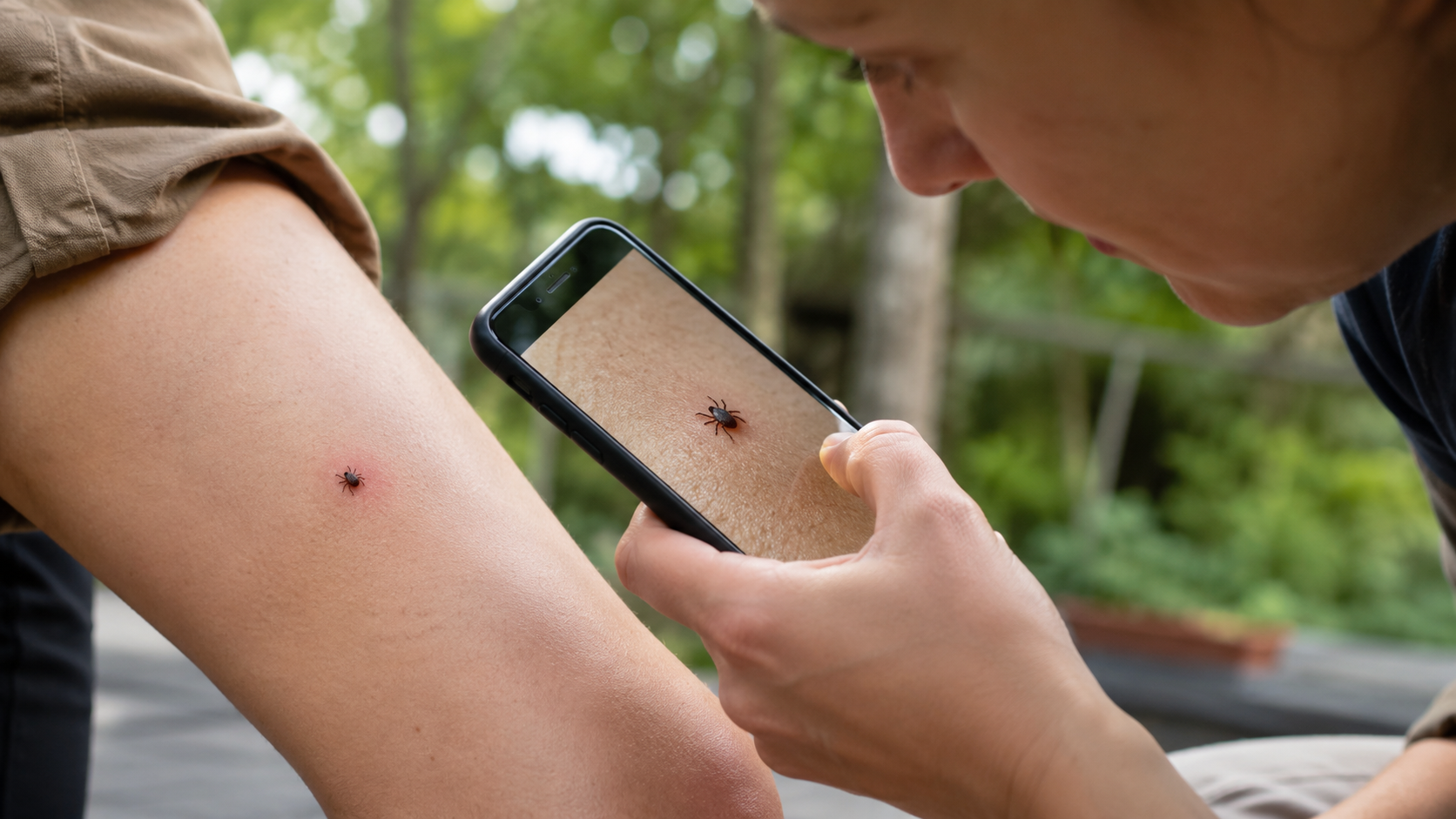
Full-Body Tick Check
How to Check the Human Body for Ticks
Ticks can attach almost anywhere on the human body. A careful full-body check helps you find small ticks that may be hidden in hair, skin folds or other hard-to-see areas.
This guide explains which parts of the body to inspect, how to follow a consistent checking routine and how the Tick Camera can help you examine small or suspicious spots more closely.
How to Check Your Body for Ticks at a Glance
Use good lighting and inspect your body in the same order each time. A systematic check is more reliable than looking only at exposed skin or areas that feel unusual.
- Check clothing, shoes and outdoor equipment.
- Inspect your feet, ankles and lower legs.
- Move upward and check behind the knees and along the thighs.
- Inspect the groin, waist, belly and navel.
- Check your back, armpits, arms and elbows.
- Inspect your neck, ears, hairline and scalp.
- Use a mirror or ask another person to help with areas you cannot see.
- Examine small bumps or dark spots closely before touching or removing them.
A dark spot or raised area is not automatically a tick. The guide How to Identify a Tick explains common tick features and possible look-alikes.
Where Do Ticks Commonly Attach on the Human Body?
Ticks may attach almost anywhere. Warm, protected, hairy and difficult-to-see areas deserve particular attention, but they should be checked as part of a complete body inspection.
Scalp and hairline
Check the scalp by parting the hair into small sections. Inspect the hairline, the crown of the head and the area where the hair meets the neck.
Thick or long hair can make small ticks difficult to see. A second person, mirror or the Tick Camera may help with a closer inspection.
Behind and around the ears
Look carefully behind both ears and around the outer ear. Check the folds around the ear and the area between the ear and hairline.
Neck and back of the neck
Inspect the front, sides and back of the neck. Pay particular attention to the area beneath the hairline and around shirt collars.
Armpits and inside the elbows
Raise each arm and inspect the entire armpit and surrounding skin. Continue down the arms and check the inner elbows.
Chest and under the breasts
Inspect the chest and any areas where skin touches skin. Check under the breasts and around clothing edges when appropriate.
Waist, belly and navel
Look along the waistline and around areas covered by tight clothing. Check the belly, navel and nearby skin folds carefully.
Groin and intimate areas
Check the groin and nearby skin folds privately and carefully. A hand mirror may help you inspect areas that are difficult to see.
Back and buttocks
The back and buttocks can be difficult to inspect alone. Use two mirrors or ask a trusted person to help with the check.
Legs and behind the knees
Inspect both legs completely, including the inner thighs and the areas behind the knees.
Feet, ankles and between the toes
Check the ankles, feet, soles and spaces between the toes. Pay attention to sock lines and areas around footwear.
Full-Body Tick Check: Step by Step
Following the same order each time makes the check easier and reduces the chance of missing an area.
1. Move to a well-lit and private place
Choose a room with bright, even lighting. Use a full-length mirror, hand mirror or phone light when necessary.
Make sure you have enough privacy to inspect covered areas thoroughly.
2. Check your clothing first
Ticks can remain on clothing before attaching to the skin. Inspect clothing worn outdoors, including:
- Trouser legs and cuffs
- Socks and shoes
- Waistbands and belts
- Shirt collars and sleeves
- Jacket seams and pockets
- Hats and other headwear
3. Begin at your feet
Start with the soles, tops and sides of both feet. Check between the toes and around the ankles.
Working from the feet upward gives the check a clear structure and makes it easier to remember which areas you have already inspected.
4. Check both legs completely
Inspect the lower legs, calves, shins and knees. Bend each knee and check the skin behind it.
Continue upward along the thighs and inspect the inner thighs carefully.
5. Inspect the groin and waist
Check the groin, nearby skin folds and the areas around underwear or clothing edges.
Continue around the waist, hips, belly and navel.
6. Check the chest, back and armpits
Inspect the front of the torso before checking the sides and back. Raise both arms and examine the armpits and the surrounding skin.
Use mirrors or ask another person to help inspect the middle and lower back.
7. Inspect the arms and hands
Check the shoulders, upper arms, elbows, forearms, wrists and hands. Look between the fingers and around rings, watches or wristbands.
8. Check the neck, ears and hairline
Inspect all sides of the neck and the skin behind and around both ears. Check the entire hairline, including the forehead, temples and back of the neck.
9. Check the scalp in sections
Part the hair into small sections and inspect the exposed scalp gradually. Work from one side of the head to the other.
Run your fingertips gently over the scalp while looking for small bumps, but do not rely on touch alone.
10. Recheck suspicious areas
Look again at any small bump, dark spot or unusual area. Use better lighting, a mirror or a camera view before attempting to remove anything.
Have You Found a Small Bump or Dark Spot?
A tick may appear as a small dark or brown spot attached to the skin. Depending on its size and feeding stage, it may be flat, slightly raised or more rounded.
However, many other things can look similar, including:
- Moles
- Skin tags
- Scabs
- Dried blood
- Small pieces of dirt or plant material
- Other skin changes
Do not scratch, squeeze or pull forcefully at a spot that you have not identified.
Instead:
- Move into better lighting.
- Look at the area from several angles.
- Check for a separate body and visible legs.
- Use magnification or the Tick Camera when helpful.
- Avoid repeatedly disturbing the area.
- Seek medical advice when the spot remains unclear or concerning.
When Should You Check Your Body for Ticks?
Check yourself after spending time in places where ticks may be present, including wooded, grassy or brush-covered areas.
A check may be useful after activities such as:
- Hiking
- Camping
- Gardening
- Walking through long grass
- Working outdoors
- Hunting or fishing
- Walking a dog
- Spending time in a park or garden
Ticks may also be carried indoors on clothing, equipment or pets. Examine these items as part of your routine rather than checking only your skin.
Check before settling indoors
Inspect exposed skin, clothing and equipment soon after returning. Remove outdoor clothing carefully and check it before placing it with other laundry.
Shower and perform a complete body check
Showering soon after outdoor activity provides an opportunity to wash away unattached ticks and complete a full-body check.
Check again later when necessary
A second check can be useful if the first inspection was rushed, lighting was poor or you were unable to inspect the scalp and back properly.
Found an Attached Tick: What Should You Do?
An attached tick should be removed carefully. Use fine-tipped tweezers or a suitable tick-removal tool, grasp the tick close to the skin and pull upward slowly and steadily.
Avoid squeezing or crushing the tick’s body. After removal, clean the bite area and your hands with soap and water or an appropriate antiseptic.
After removal, these guides may also be useful:
Common Mistakes During a Body Check
Checking only exposed skin
Ticks may move beneath clothing before attaching. Covered areas should be included in a complete check.
Looking only at the legs
Although ticks may first contact the lower body, they can move to the torso, neck, scalp or other protected areas.
Forgetting the scalp
Small ticks can be difficult to see beneath hair. Part the hair into sections and inspect the scalp gradually.
Skipping the back and groin
Private or difficult-to-see areas are easy to overlook. Use mirrors or ask a trusted person for help when appropriate.
Relying only on touch
An attached tick may feel like a small bump, but many normal skin features can feel similar. Always look at the area carefully.
Pulling at every dark spot
Not every dark or raised area is a tick. Inspect the spot before attempting removal.
Forgetting clothing and equipment
Ticks can remain on clothing or outdoor equipment and attach later. Include these items in your check.
Frequently Asked Questions About Ticks on Humans
Where are ticks most commonly found on the human body?
Ticks often attach in warm, protected or hairy areas, including the scalp, hairline, behind the ears, armpits, waist, groin and behind the knees. However, the entire body should be checked.
How do I check my scalp for ticks?
Part the hair into small sections and inspect the exposed scalp in bright light. Ask another person to help when possible, especially with the back of the head.
Can a tick hide under clothing?
Yes. A tick can crawl beneath clothing before attaching. Check covered areas as well as exposed skin.
Can you feel a tick attached to your skin?
Some attached ticks may feel like a small bump. Touch alone cannot confirm whether a spot is a tick, so inspect it visually before attempting removal.
How small can a tick be?
Young ticks can be very small and may resemble a freckle, seed or tiny dark speck. Good lighting and magnification can make them easier to inspect.
Should I check for ticks after gardening?
Yes. Ticks may be present in gardens and other grassy or brush-covered outdoor areas. Check your body, clothing and equipment after gardening.
What should I do if I find an attached tick?
Remove it carefully with fine-tipped tweezers or a suitable tick-removal tool. Follow the full guide How to Remove a Tick Safely.
When should I seek medical advice after a tick bite?
Seek medical advice if you develop an expanding rash, feel unwell or experience symptoms that concern you after a tick bite. You should also seek advice when a skin change remains unclear or difficult to assess.
Your Next Step
Sources
This guide was prepared using information from recognized public-health and medical organizations.
Centers for Disease Control and Prevention: Preventing Tick Bites ↗
Centers for Disease Control and Prevention: Preventing Lyme Disease ↗
European Centre for Disease Prevention and Control: Protective Measures Against Tick Bites ↗
European Centre for Disease Prevention and Control: Lyme Borreliosis ↗
Learn more about our research and review process in our Editorial Policy and Sources and References.