
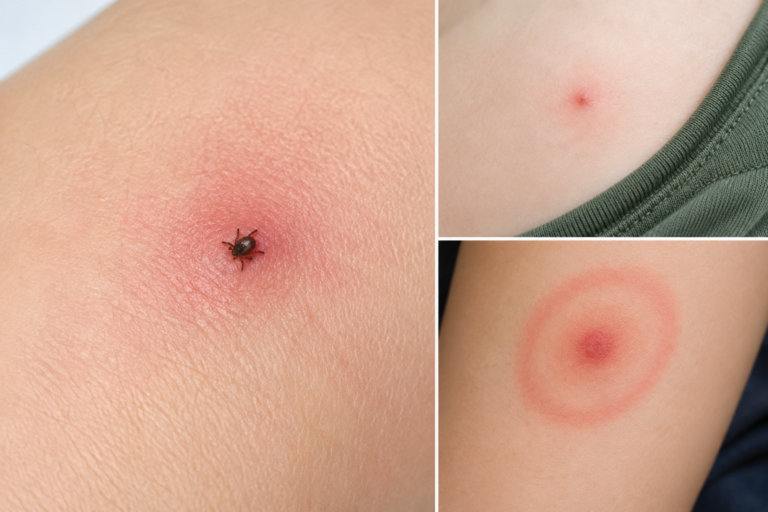
Tick Bites and Skin Reactions
What Does a Tick Bite Look Like?
A recent tick bite may look like a small red or discolored spot, a tiny raised bump or mild local irritation. In some cases, the skin may initially look almost normal. A rash that gradually expands, changes shape or is accompanied by other symptoms should be assessed by a healthcare professional.
This guide explains how a tick bite may look immediately after removal, how the area can change over time and how the Tick Camera can help you document the skin for later comparison.
What Does a Tick Bite Look Like at a Glance?
A tick bite can look different from person to person. Immediately after the tick is removed, you may see:
- A small red, pink, purple or brown spot
- A tiny raised bump
- A small puncture mark
- Mild swelling
- A little local tenderness
- Mild itching
- A tiny scab
- A dark dot where the tick was attached
- No obvious skin change at all
A mild local reaction usually remains close to the attachment site and gradually improves.
Seek medical advice if the area expands, forms a larger circular or oval patch, becomes increasingly painful or is accompanied by fever, headache, unusual tiredness, muscle pain, joint pain, facial weakness or other concerning symptoms.
What Can a Normal Local Tick Bite Reaction Look Like?
The skin may react locally to the tick’s attachment and removal. This reaction can resemble other minor insect bites or irritated skin.
A small red or discolored spot
A small area of redness or discoloration may appear around the attachment point. On darker skin, the area may look purple, brown, grey or darker than the surrounding skin rather than bright red.
A small local patch that remains limited and begins to fade can be consistent with irritation from the bite.
A small raised bump
The bite may leave a small firm or slightly swollen bump. This can result from local inflammation or irritation.
Do not repeatedly squeeze or press the bump, as this can make it look more inflamed.
A tiny puncture mark
You may be able to see a small central point where the tick’s mouthparts entered the skin.
The puncture can be difficult to see without good lighting or magnification.
A small dark dot
A dark point may represent a tiny scab, dried blood or a small retained fragment of the tick’s mouthparts.
Do not dig into the skin when the dark point cannot be grasped easily. Repeated digging can cause further irritation and injury.
Mild swelling
A little localized swelling can occur after the tick is removed. It should be monitored for improvement rather than repeatedly touched.
Mild itching
The attachment site may itch slightly while the skin heals.
Avoid scratching, since broken skin can increase irritation and the risk of a secondary skin infection.
A tiny scab
A small scab can form over the attachment site. Leave it in place and allow the skin to heal naturally.
No visible reaction
Some tick bites leave little or no obvious mark. The absence of redness does not prove that there was no tick bite and does not rule out every tick-borne illness.
What Does a Tick Bite Look Like Immediately After Removal?
Immediately after removal, the skin may show a small localized reaction caused by the attachment, pressure from the tick’s mouthparts or the removal process.
You may notice:
- A small central puncture
- Minor redness or discoloration
- A tiny amount of dried blood
- Mild swelling
- A firm pinpoint bump
- A small dark fragment
- Slight tenderness
Clean the area gently
Clean the skin with soap and water, rubbing alcohol or another appropriate skin-cleaning method.
Avoid aggressive scrubbing, since it may make the area look more irritated and make later comparison difficult.
Take a photograph
A photograph taken soon after removal provides a useful starting point for observing changes.
Note the date and location
Write down the date, approximate time and exact body location where the tick was attached.
Check for additional ticks
Perform a complete body check after finding one attached tick. Inspect clothing and outdoor equipment as well.
What Does a Tick Bite Look Like After One or Two Days?
During the first few days, mild local redness, tenderness or itching may remain around the attachment point.
The area may:
- Remain as a small localized spot
- Develop a tiny scab
- Feel mildly itchy
- Become less swollen
- Begin to fade
- Look temporarily darker after irritation
A small bite reaction may occur within the first 48 hours and can be raised or itchy. A rash that continues to expand rather than remaining localized deserves medical attention.
Do not judge by one photograph alone
Lighting and camera angle can change how redness appears. Compare the actual size and border of the area as well as the image.
Avoid drawing conclusions from color alone
Redness can appear differently depending on skin tone, lighting, camera settings and local irritation.
Look for improvement
A minor reaction should generally begin settling rather than progressively expanding or becoming more painful.
What Kind of Rash Can Be a Warning Sign?
A spreading rash after a possible tick bite should be assessed by a healthcare professional.
The rash associated with Lyme disease is called erythema migrans. It can take several forms and does not always look like a perfect target.
An expanding circular rash
The rash may begin as a small discolored area and gradually expand outward.
An expanding oval rash
Some rashes are oval rather than perfectly round.
A solid red or discolored patch
The entire rash may appear evenly red, purple, brown or darker than the surrounding skin.
A target-like or bull’s-eye rash
Some rashes develop a darker outer border, a lighter middle area and a darker centre.
This pattern is well known, but it is not present in every case.
A rash without central clearing
The rash may remain solid in color without a pale centre.
A rash with a darker centre
The original attachment point may remain darker, crusted or more inflamed than the surrounding expanding area.
A rash with an irregular border
The edge may not form a perfect circle. It can appear uneven or change shape as it expands.
More than one rash
In some cases, additional rashes can appear elsewhere on the body rather than only at the original bite site.
A rash that is not very itchy or painful
An erythema migrans rash is often not strongly itchy, hot or painful, although individual experiences differ.
Do not rule out a concerning rash solely because it does not hurt or itch.
CDC and NHS guidance note that erythema migrans may gradually expand and can appear circular, oval, uniformly colored or target-like.
Does Every Lyme Disease Rash Look Like a Bull’s-Eye?
No. A bull’s-eye or target-shaped rash is only one possible appearance.
The rash may instead look like:
- A solid expanding red patch
- A pink or purple oval area
- A darker patch on brown or black skin
- An expanding area with a central crust
- An irregularly shaped discolored patch
- Several expanding patches on different parts of the body
Waiting for a perfect bull’s-eye can delay assessment. Seek medical advice when a rash spreads after a known or possible tick bite.
Skin tone changes the visible appearance
On darker skin, inflammation may appear purple, brown, grey, dark red or subtly darker than nearby skin.
Photography can alter color
Phone cameras, flash, room lighting and automatic image processing can make the rash appear lighter or darker than it is.
Measure expansion, not only color
The change in size and border over time may be more useful than whether the rash appears bright red.
How Can a Tick Bite Change Over Time?
The timeline varies depending on the local skin reaction, whether the tick was removed completely and whether an infection develops.
Immediately after removal
The area may show a puncture mark, small red spot, mild swelling or no obvious change.
During the first few days
A minor local reaction may remain small and begin to fade. A tiny scab or mild itching can occur.
Over the following days or weeks
Continue monitoring for an expanding rash or new symptoms.
Lyme disease rash timing
A Lyme disease rash may develop days or weeks after the bite. CDC describes early symptoms as occurring approximately 3 to 30 days after a bite, while NHS guidance notes that the rash can occasionally appear later.
Symptoms without a rash
Some people develop fever, headache, tiredness, muscle pain, joint pain or other symptoms without noticing a rash.
Do not rely on the skin appearance alone when you feel unwell after a possible tick bite.
Can a Tick Bite Look Like a Mosquito Bite?
Yes. A small local tick bite reaction can resemble a mosquito bite or another minor insect bite.
Both can cause:
- A small raised bump
- Mild redness
- Itching
- Localized swelling
Features that may increase concern after a possible tick bite include:
- A known attached tick
- A central puncture or retained fragment
- A rash that steadily expands
- Symptoms developing after outdoor exposure
- Fever, fatigue, headache or body aches
The appearance alone may not reveal which insect caused the reaction.
Can a Tick Bite Look Like a Pimple?
A tick bite can leave a small raised bump that resembles a pimple.
However, a typical pimple may have:
- A visible pore
- A white or yellow centre
- Oil or pus beneath the skin
- Tenderness associated with a blocked follicle
- Nearby acne spots
Do not squeeze an unfamiliar bump after a possible tick bite. Squeezing can increase redness and make the area harder to assess.
Watch for worsening inflammation
Increasing pain, warmth, swelling or pus may indicate a skin infection and should be assessed professionally.
Can a Tick Bite Look Like a Bruise?
A tick bite or local skin reaction can sometimes appear darker than the surrounding skin or develop mild bruising, especially after difficult removal or repeated manipulation.
A bruise-like mark may appear:
- Purple
- Blue
- Brown
- Red-brown
- Grey
A rapidly spreading bruise-like rash, severe pain, fever or general illness requires medical attention.
Can a Tick Bite Form a Lump?
A small firm bump can remain after tick removal because of local inflammation, irritation or a retained fragment.
A small temporary bump
A localized bump that gradually improves may reflect the skin’s reaction to the bite.
A bump with a dark centre
A dark centre may represent a tiny scab, dried blood or retained mouthparts.
A growing or painful lump
Seek medical advice when the lump grows, becomes increasingly painful, feels hot, produces discharge or does not improve.
Do not repeatedly squeeze it
Pressing the lump can prolong irritation and introduce bacteria.
What If a Dark Dot Remains After Tick Removal?
A tiny dark point can remain if a small fragment of the tick’s mouthparts is left in the skin.
Do not dig aggressively
If the fragment cannot be grasped easily with clean fine-tipped tweezers, avoid repeated digging.
Keep the area clean
Clean the skin and allow it to heal.
Monitor local symptoms
Seek medical advice if redness, pain, swelling, warmth or discharge increases.
Document the spot
Take a clear photograph so you can compare whether the area is improving.
How to Monitor a Tick Bite
A simple observation routine can help you notice meaningful changes without repeatedly irritating the skin.
1. Record the date
Write down when the tick was found and removed.
2. Record the body location
Note the exact location, such as behind the left knee, on the scalp or near the waist.
3. Take a clear baseline photograph
Photograph the bite area soon after removal.
4. Include surrounding skin
A wider image makes it easier to see whether a rash expands beyond the original spot.
5. Use a clean size reference
Place a clean ruler beside the area when useful. Do not place unclean objects directly on irritated skin.
6. Use consistent conditions
Take follow-up images from a similar distance, angle and lighting.
7. Check the border
Notice whether the edge is stable, fading or expanding.
8. Monitor symptoms
Record fever, headache, tiredness, muscle pain, joint pain, facial weakness or other new symptoms.
9. Avoid excessive checking
Checking visually once a day is generally more useful than repeatedly rubbing, pressing or photographing the area throughout the day.
10. Seek advice when changes concern you
Do not wait for the rash to match a particular internet photograph exactly.
How to Photograph a Tick Bite Clearly
A useful photograph should show both detail and scale.
Use natural or neutral light
Avoid colored lamps and heavy shadows.
Turn off beauty filters
Skin-smoothing and automatic filters may hide texture or alter color.
Hold the camera steady
Rest your hand against a stable surface or use the freeze function when available.
Do not use excessive digital zoom
Digital zoom can enlarge blur. Move closer only while the camera can still focus.
Take a close image
Show the puncture, bump or center of the reaction clearly.
Take a wider image
Include enough surrounding skin to compare the total size later.
Protect privacy
Store images securely, especially when documenting a child or a private body area.
When Should You Seek Medical Advice?
Contact a healthcare professional if you develop a concerning rash, worsening skin reaction or new symptoms after a known or possible tick bite.
Seek advice if:
- The rash expands outward
- The rash becomes circular or oval
- The area continues growing over several days
- You develop fever or chills
- You develop headache or neck stiffness
- You feel unusually tired or unwell
- You develop muscle or joint pain
- You develop facial weakness
- You notice numbness or other neurological symptoms
- The bite becomes increasingly painful, swollen or warm
- The area produces pus or discharge
- The tick was attached near the eye or deep inside the ear
- You cannot remove the tick safely
- You are medically vulnerable and concerned about the exposure
Tell the clinician that you had a known or possible tick bite, when it occurred and where the exposure may have happened. CDC recommends seeking medical attention when compatible symptoms occur following a tick bite or exposure in an area where Lyme disease occurs.
Do not wait for a bull’s-eye
Not every Lyme disease rash forms a target pattern.
Do not rely on a photograph alone
Symptoms and exposure history matter in addition to the appearance of the skin.
Do not use leftover antibiotics
Medication decisions should be made by an appropriate healthcare professional.
Seek urgent help for severe symptoms
Seek urgent medical assistance for difficulty breathing, severe weakness, fainting, confusion, chest symptoms, severe headache, rapidly worsening illness or another serious reaction.
What Does a Tick Bite Look Like on a Child?
A tick bite on a child may look like a small red or discolored spot, tiny bump, puncture mark or mild local swelling.
Check carefully because the bite may be hidden:
- On the scalp
- Behind the ears
- Under the arms
- Around the waist
- Inside the belly button
- In the groin
- Behind the knees
- Between the toes
Children may not describe symptoms clearly
Watch for unusual tiredness, irritability, reduced activity, headache, fever or changes in appetite.
Protect the child’s privacy
Explain the check calmly and allow older children to inspect private areas themselves when appropriate.
Seek medical advice when concerned
Contact a healthcare professional if the child develops a spreading rash, fever, unusual weakness or other concerning symptoms.
Can You Have a Tick Bite Without Finding the Tick?
Yes. A tick may detach before it is noticed, or the bite may be hidden beneath hair, clothing or within a skin fold.
A small red spot alone does not prove that a tick caused it. Many other bites and skin conditions can look similar.
Consider:
- Recent outdoor activity
- Known tick exposure in the area
- A spreading rash
- Fever or flu-like symptoms
- A bite in a common tick location
- Ticks found on pets or clothing
Seek medical advice if a spreading rash or concerning symptoms develop, even if no tick was found.
Common Mistakes When Checking a Tick Bite
Waiting for a perfect bull’s-eye
A Lyme disease rash can be solid, oval, irregular or differently colored rather than target-shaped.
Assuming a small red spot is automatically Lyme disease
A small localized reaction can occur after a bite. The pattern of change and other symptoms are important.
Assuming no rash means no risk
Some people may develop other symptoms without noticing a rash.
Using only photographs to judge size
Changes in camera distance and lighting can make the area appear larger or smaller.
Pressing or scratching the bite repeatedly
This can increase redness and make the skin harder to assess.
Drawing directly around irritated skin with an unsuitable pen
A clean ruler and photographs can document size without applying ink to damaged skin.
Comparing the rash only with dramatic online images
Early or subtle rashes may not resemble severe examples found online.
Ignoring general symptoms
Monitor overall health as well as the appearance of the bite.
Using filters on photographs
Filters can change skin tone, redness and texture.
Delaying medical advice while waiting for the rash to change
Seek help when symptoms or circumstances are concerning rather than waiting for a textbook appearance.
Frequently Asked Questions About What Tick Bites Look Like
What does a tick bite look like immediately after removing the tick?
It may look like a small red or discolored spot, tiny puncture, raised bump or mild area of swelling. The skin may also appear nearly normal.
Is a small red spot normal after a tick bite?
A small localized red or discolored area can occur after removal. Seek medical advice if it expands, becomes increasingly painful or is accompanied by other symptoms.
Does a tick bite always leave a bull’s-eye rash?
No. Many bites do not produce a bull’s-eye. A Lyme disease rash can also appear as a solid, oval, irregular or differently colored expanding patch.
How soon can a rash appear after a tick bite?
A local bite reaction may appear quickly. An erythema migrans rash associated with Lyme disease generally develops later and may appear days or weeks after the bite.
Can a tick bite itch?
Mild itching can occur with local irritation. Seek advice if itching is severe, the rash is spreading or other symptoms develop.
Can a tick bite be painful?
The bite may be mildly tender, especially after removal. Increasing pain, warmth, swelling or discharge should be assessed.
Can a tick bite look like a pimple?
Yes. A small raised bite reaction can resemble a pimple. Avoid squeezing it and monitor whether it improves or changes.
Can a tick bite look like a bruise?
The area can sometimes look darker or mildly bruised. A rapidly spreading bruise-like rash or severe symptoms require medical advice.
How long should I monitor the bite?
Monitor the skin and your general health over the following days and weeks, since some symptoms may not appear immediately.
When should I contact a doctor?
Seek medical advice for a spreading rash, fever, headache, unusual tiredness, muscle or joint pain, facial weakness, neurological symptoms or worsening local inflammation.
Your Next Step
Sources
This guide was prepared using information from recognized public-health organizations.
Centers for Disease Control and Prevention: Signs and Symptoms of Lyme Disease ↗
Centers for Disease Control and Prevention: Lyme Disease Rashes ↗
Centers for Disease Control and Prevention: What to Do After a Tick Bite ↗
UK Health Security Agency: Lyme Disease Signs and Symptoms ↗
UK Health Security Agency: Lyme Disease Differential Diagnosis ↗
Learn more about our research and review process in our Editorial Policy and Sources and References.